The Future of Programming: Will AI Replace Software Developers?

We've got entered the age of era, and these days Programming has turn out to be one of the maximum decent, high-paying jobs one may want to get. it's also a zone that is rapidly evolving, and nearly the whole thing that has currently been related to progress has additionally been associated with programming. This is amazing. However, programmers are not any less susceptible than everybody else in terms of losing their jobs. In this text, we ask the question, "Will programmers become obsolete in future?"
Will Programmers Have a Job in the Future?
There are 23 million software program developers within
the international. By 2023, that variety is
expected to develop to 27.7 million. in step with the us Bureau of labor facts,
among 2016 and 2026, the number of
software program engineers is anticipated to grow at a price of 24% - a good deal faster than any other
career within the USA. observing these statistics, one would think there's nothing
to fear about.
However, some are worried that programming, like every other activity, is at a risk to be made obsolete within the destiny. the primary argument given is commonly that of AI and automation: What if AI can software other matters or itself? What if we can automate plenty of the equal code programmers now do? In a way, the fear is rather understandable. We want best to study agencies such as Wix and Wordpress, which permit anyone to design and build an internet site without ever having to learn HTML and CSS. That’s right - today, if you need to construct a website by yourself at home, you could do it.
Software Developers’ Vs Automation
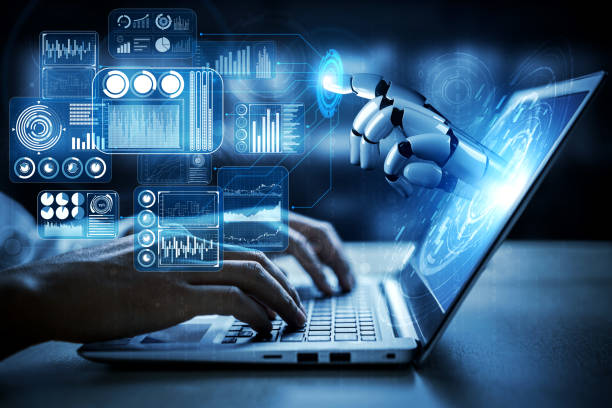
There are various ways to automate software development steps and processes:
There are a few ways to automate software development:
- Testing Automation: One of the most common forms of automation. Most of a programmer’s time is spent on mundane tasks such as. These automated tasks can allow programmers to focus on high-level design.
- Quality Assurance: The sooner a problem is found, even in an early stage of development and corrected for, the less costly it will be. With automation and software testing tools, you can track exactly how your application runs on different platforms and devices.
- Cost Management Automation: Cost management automation allows even a small business to scale without much worry. Tasks like Cost estimation , Cost tracking and allocation etc., can be performed by automated tools like Harvest or Oracle Primavera.
- Requirement Gathering: Requirements gathering can be automated using tools like Jira (issue tracking and project management tool) and requirements management tools like Gherkin (business process modeling and documentation language).
- Unit Testing: The process of unit testing can be automated using tools like Taurus (automated test framework for Python) and Junit (automated Java unit testing).
- Deployment: Deployment can be automated using various tools. Tools like Docker allow applications to be hosted and deployed without the hassle of configuring servers or frameworks yourself.
It might seem that software development can be completely taken over by automation. However we must understand that ; first of all, we had been automating tasks for a long time now, and if something, call for software program engineers has mostly effectively increased. Thinking about website programming, with HTML and CSS, it's right that we had been capable of automate several of it. However, for one, these offerings cannot truly be said to be changing everybody who could have otherwise built the website themselves. Most of the people benefiting from those are bloggers, online dealers, and so on, not programmers. On pinnacle of that, whilst these offerings are correct, there is a lot of custom functionality, of the type you may see on Facebook, that comes from years of iterating and enhancing the codebase. That must be carried out via human beings that apprehend the product, the customers, and, as a minimum for now, people who could code.
Jobs that require deep emotional/abstract intelligence are safe as AI is not good at understanding situational context, taking judgment calls, or rationalizing as humans do. Fields that require creativity like research, design, development, test automation, smart devices, and so on are comfortable in the safe zone in the immediate future. Automation may assist jobs like managers and quality testers, but it will not eliminate them. These professions require an out of box thinking approach or try something not done before and are not data-driven so AI can not easily penetrate this space.
What about Artificial Intelligence?

Artificial Intelligence (AI) is transforming businesses all over the globe, and that includes software development. It enhances the traditional processes using AI-enabled solutions and tools. It creates a fundamental shift in software development. Even though AI is turning increasingly powerful, a person nonetheless must program that AI. whilst things along with gadget mastering seem magical, as though the AI were programming itself, they could be nothing without humans working at the algorithms - inventing them, enhancing them, refining them. In truth, Google by itself now employs around 30,000 people to work on their numerous AI systems.
We may anticipate a better app being built in the current environment as a result of AI's influence on how we develop applications. The future of software development will be shaped by our understanding of AI, as most firms today are expressing interest in AI. 80 percent of businesses are wisely utilizing AI. Nearly 47% of businesses with advanced digital infrastructure have an AI strategy. By 2021, it is expected that just AI tools would generate $2.9 trillion in commercial value.
Software developers should comprehend the role of AI in software development and assess the changes if they wish to implement this method. These are the features that AI can include into software development to give clients highly personalized goods or services.
Software design, code production, and testing are all significantly influenced by AI. For examples take code generation, it takes a lot of time and energy to take a business idea and write code for such a large enterprise. Experts have come up with a system that writes code before starting development to address the time and cost issues. The method, however, does not work well with unknowns like what the target code is intended to perform because gathering these facts takes significantly longer than building code from scratch. The workload will be somewhat lessened with AI-assisted intelligence programming.
Imagine that we could convey the project concept to our system in everyday English and have it translate it into executable code. Artificial intelligence in software development can change the narrative even when it appears like science fiction! AI tools and natural language processing will make it possible.
Planning projects and developing them requires specific knowledge and experience. Designers have a difficult time choosing the right design for each step without making mistakes. Until the client finds the ideal answer, a retracts and forward exploring plan drives dynamic adjustments to the design. The most capable approaches for project design may be made possible by automating some complex processes with AI tools. For instance, designers can use AIDA (Artificial Intelligence Design Assistant) to comprehend both the demands and the wants of the client and then use that information to design the ideal project. AIDA is a platform for constructing websites that analyses numerous software design configurations and displays the best customized design based on the client's requirements.
Artificial Intelligence in Software Development

Many areas of development that are too complex for humans to understand are benefited by artificial intelligence. We can see the effects of using AI technology by being aware of its effects and the potential for future advancement in software development. The effects of artificial intelligence on software development are as follows:
- Rapid Prototyping: Software development requires a lot of strategy and time for the business requirements. By creating algorithms that decrease the time spent documenting, machine learning aids engineers in speeding up this process. These technologies include natural language graphic user interfaces that can identify and follow historical patterns.
- Enhanced Data Security: Software security is a critical characteristic throughout development. The system often gathers information from network sensors and software that the customer has deployed. With the use of AI, developers may explore the data using machine learning to separate anomalies from typical activities. By incorporating AI into their development process, software development companies can also avoid false notifications, delayed warnings, and alarms.
- Bug and Error Identification: Coding is improved and made better by combining with AI tools. It's not necessary for developers and testers to deal with debugging executable files that are full of mistakes. They are better able to identify bugs quickly and fix them.
- Accuracy of Estimates: AI provides a method for estimating software that entails looking for connections and statistics in historical data from the company's prior initiatives. To provide precise estimates of cost, time, and effort, it uses business rules and predictive analytics.
So, Will Software Developers Ever Become Obsolete?
No, even though it can appear like computer programming has no hope of the future, this is not entirely true. Software developers won't go out of style, they'll evolve into AI programmers. Every day, AI programming gets better. For instance, writing code by hand is no longer a practice among programmers. Instead, they automate the work using a wide variety of clever tools. Software programming won't become obsolete as rapidly. Even though employment in computer programming may shrink in the near future, it is still important. Learning genuine machine code and high-demand analytical abilities as a computer programmer will secure their relevance in the industry.
That isn't to say, of course, that AI will in no way update programmers in the future. AI can already code, and its miles sure to hold changing many coding duties, similar to era has changed several human tasks over the last few centuries, and an increasing number of over the previous couple of many years. However, for "programmers to come to be obsolete" could require a far extra advanced AI, or intelligences. And its miles entirely viable that, through then, we are probably asking this equal query about every other profession on earth.
Within the near destiny, it looks like software
engineers won't be strolling out of jobs. The code
may additionally trade, languages may additionally change, and the
demanding situations may change. but
we need to understand what functions people want to see is but a human fine.
And with the call for software
program engineers increasing at the least for the foreseeable destiny in case you are planning to make a profession
in it, bets are it's a secure and precise and desirable job.
Thank you for reading till the end!
Authors:
Deven Bhadane, Aniruddha Bargaje, Tejas Bhandari, Shubham Bodake and Ranjana Burange
Comments
Post a Comment